Sensing → Reasoning → Acting
Initialising 0%

ABOUT THE LAB

AI-Based Autonomous Systems Research Lab

Neuronomy Lab builds machine intelligence for systems that have to work outside the lab: distributed, noisy, safety-critical, and accountable to the people they affect.

25Publications
7Research areas
8Lab members
10Courses taught
2022Publishing since
Neuronomy Lab

MISSION

Why the lab exists

To build AI systems that earn the right to act. That means models which learn across distributed data without centralising it, stay robust when some of their inputs are wrong or adversarial, and report their confidence honestly enough that a clinician, a driver or a teacher can decide when to trust them.

The lab works at the point where machine learning meets real deployment — edge hardware with real limits, networks that drop packets, sensors that drift, and data that cannot legally leave the building.
FUTURE VISION

Where the work is heading

Federated and multimodal intelligence that a hospital, a school district or a highway authority can adopt without surrendering their data or their judgement.

Over the next few years the lab is pushing toward models that unlearn on request, that carry calibrated uncertainty end to end, and that hold up under adversarial conditions rather than only on benchmark splits.


GOALS

What the lab is working towards

01

Robustness that survives deployment

Byzantine-tolerant federated training and privacy budgets that still hold on real edge hardware, not just in simulation.

02

Clinical work that can be checked

ECG, ultrasound and elderly-care models evaluated for calibration and failure modes, not accuracy alone.

03

Networks that defend themselves

V2X and MANET protocols hardened against routing and forwarding attacks, validated in digital-twin traffic environments.

04

Teaching that compounds

Course material and lab training kept open, so students arrive able to contribute rather than spending a semester catching up.

05

Reproducible by default

Code, configs and seeds published with every paper.


EQUIPMENT

What the lab has to work with

The machines, instruments and platforms students actually get their hands on.

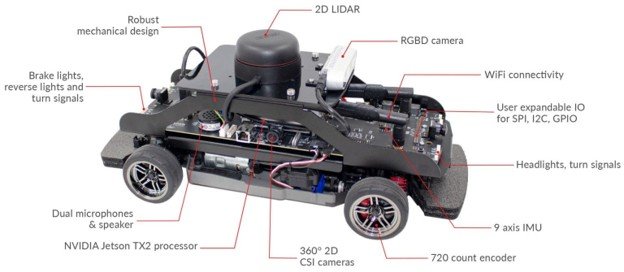
Quanser QCar 1 Autonomous Vehicle Platforms Robotics & vehicles

Quanser QCar 1 Autonomous Vehicle Platforms

Quanser QCar 1 autonomous ground-vehicle platforms

Primary autonomous ground-vehicle fleet acquired through a $500,000 DOD grant in 2023. Used for autonomous navigation, perception, localization, path planning, lane following, multi-vehicle coordination, and student research.

25 Neuronomy Lab, TAMUK
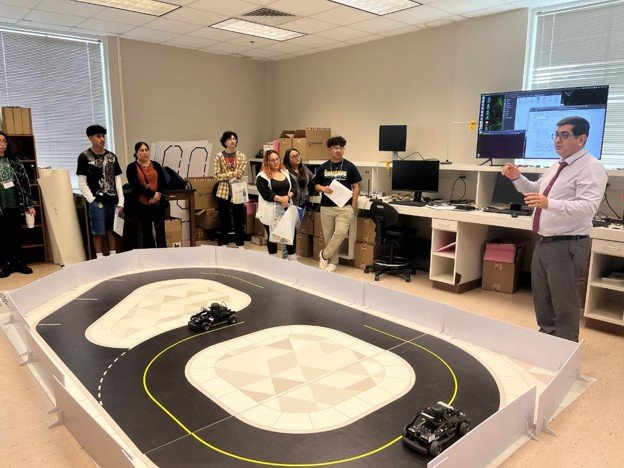
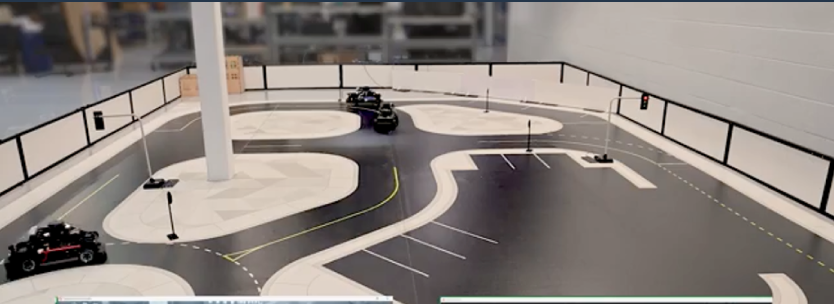
Indoor Autonomous Vehicle Test Track Robotics & vehicles

Indoor Autonomous Vehicle Test Track

Indoor road-layout and autonomous-vehicle test environment

Controlled test environment for lane following, path planning, localization, navigation, multi-vehicle coordination, and autonomous-system demonstrations.

1 Neuronomy Lab, TAMUK
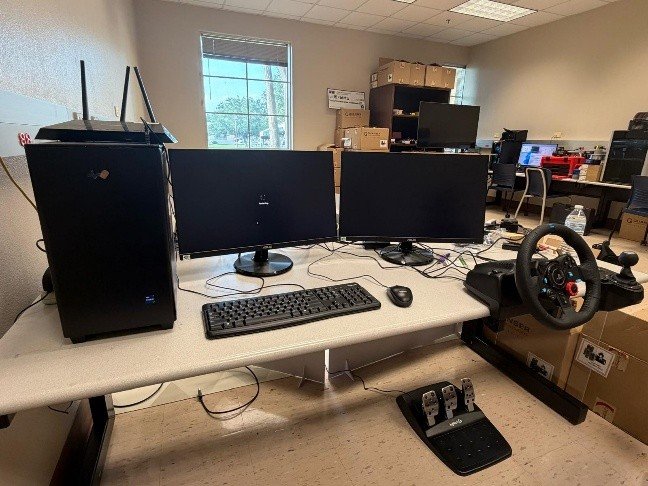
Research Computing Workstations Compute

Research Computing Workstations

Desktop workstations, monitors, and research software environment

Supports programming, simulation, data collection, QCar development, and research workflows using Python, ROS, MATLAB, and related autonomous-systems software.

3 Neuronomy Lab, TAMUK
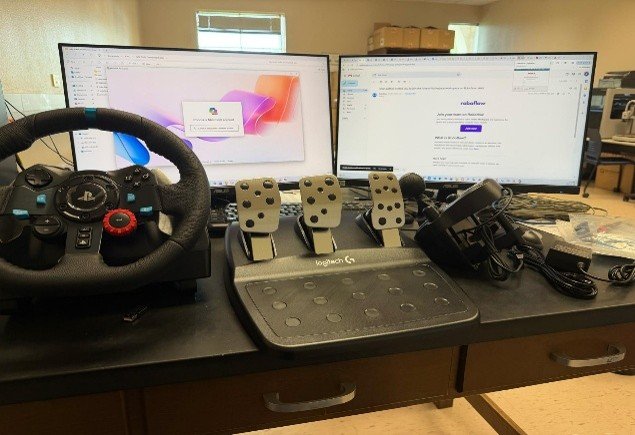
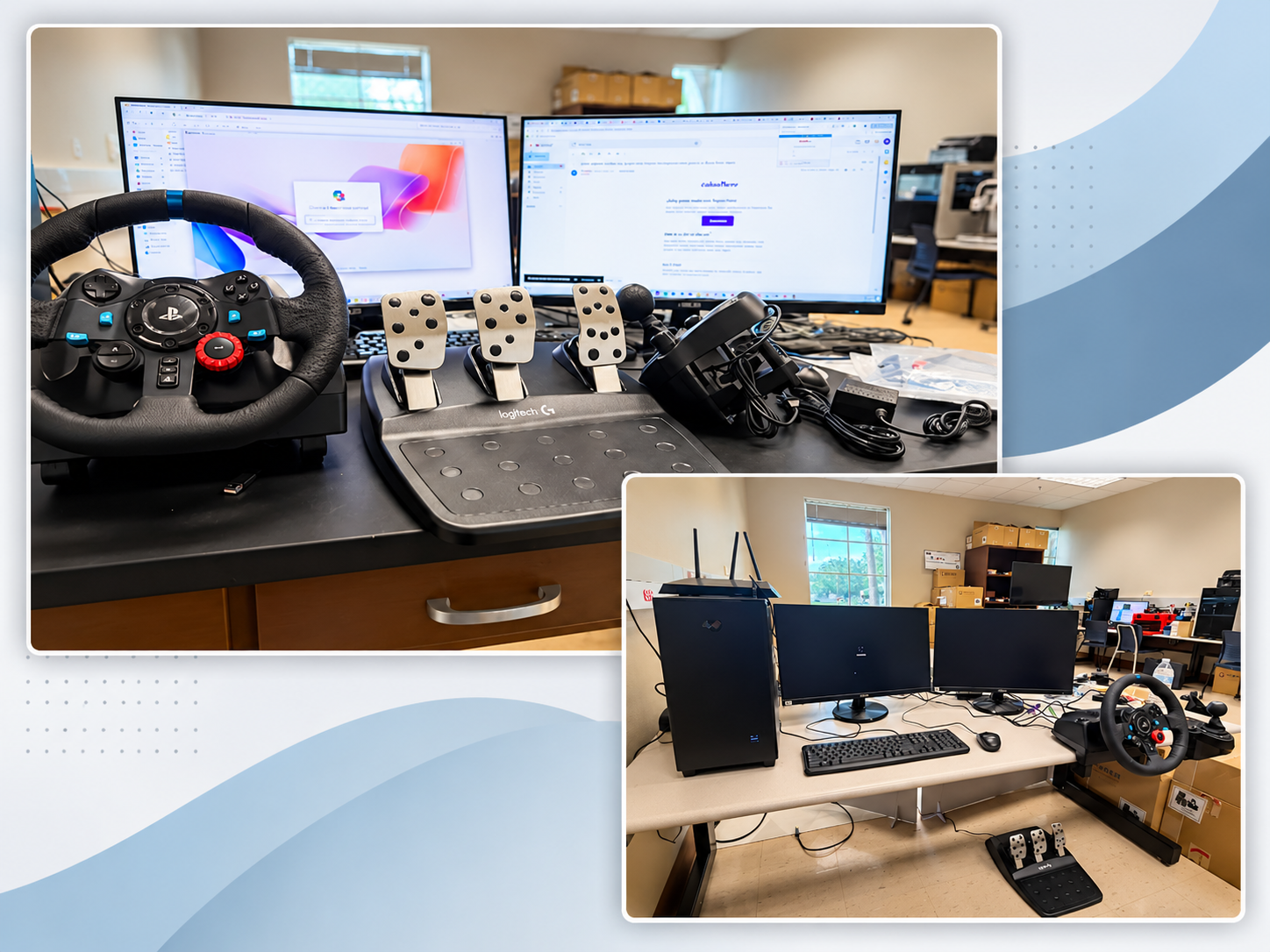
Logitech G29 Driving Simulator Equipment & instruments

Logitech G29 Driving Simulator

Steering wheel, pedals, and shifter system

Supports driving-simulator experiments, human-in-the-loop research, manual driving-data collection, driver-assistance demonstrations, and control-interface development.

Neuronomy Lab, TAMUK

HOW THE LAB WORKS

What we hold ourselves to

Honest error bars

A result without a confidence interval is an anecdote. We report what the model does not know.

Field over benchmark

Hardware breaks, data is wrong, and experiments fail outdoors. That is the interesting part, not a distraction from it.

Students own their work

First authorship, conference travel and the right to take the project with them.

Write it up

Work that is not written down did not happen.

Neuronomy Lab’s autonomous-systems infrastructure expanded significantly in 2023 with the acquisition of 25 Quanser QCar 1 platforms through a $500,000 U.S. Department of Defense grant. Since then, the lab has developed an indoor autonomous-vehicle test environment and expanded its computing, simulation, robotics, and human-in-the-loop capabilities to support research and hands-on student training.


JOIN US

Interested in working on any of this?

Positions are listed only while they are genuinely open, and enquiries from strong candidates are welcome at any time.